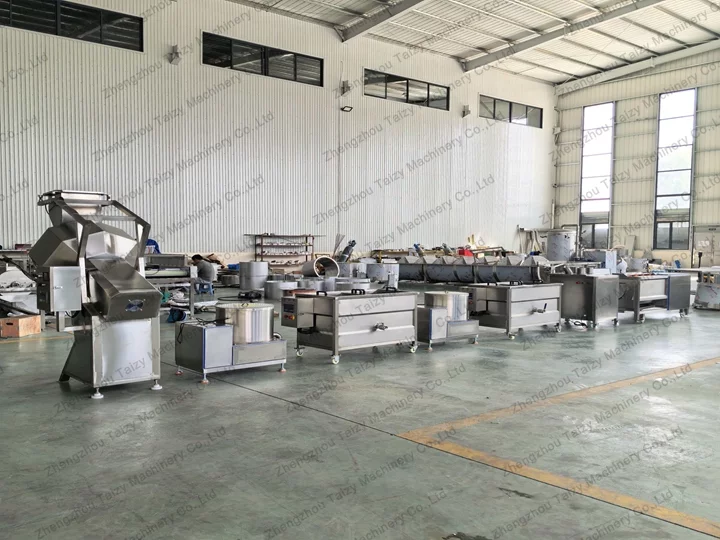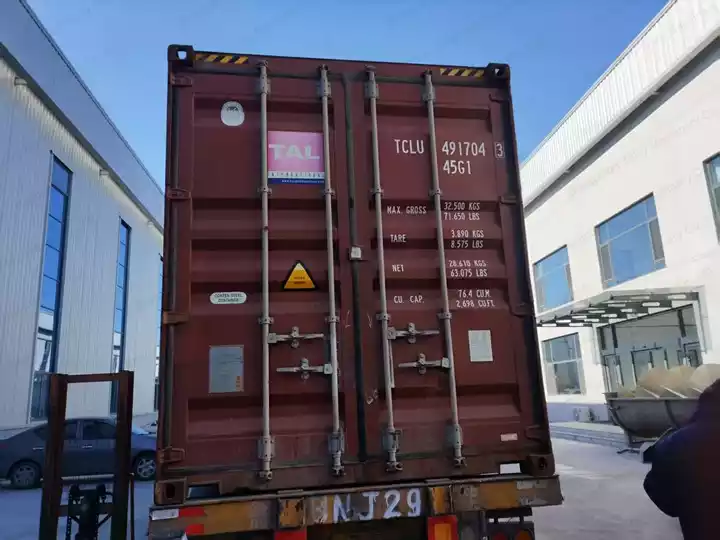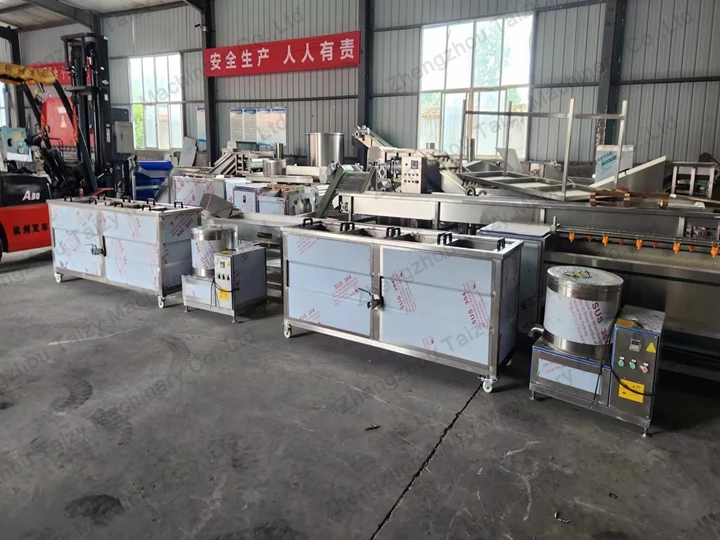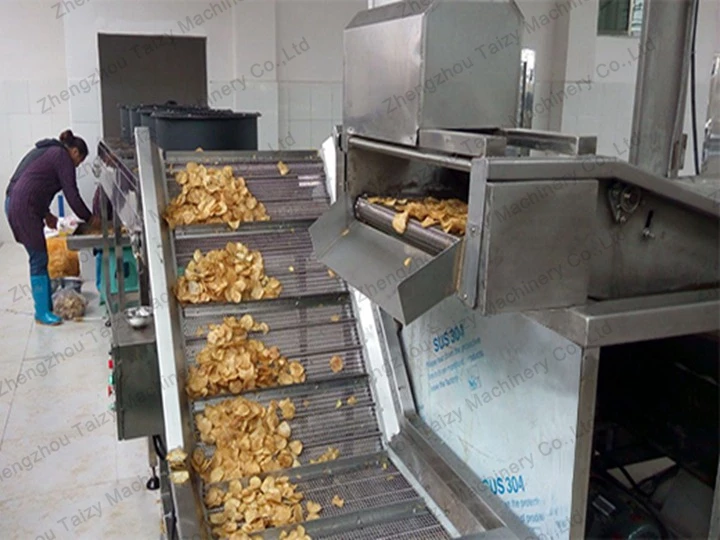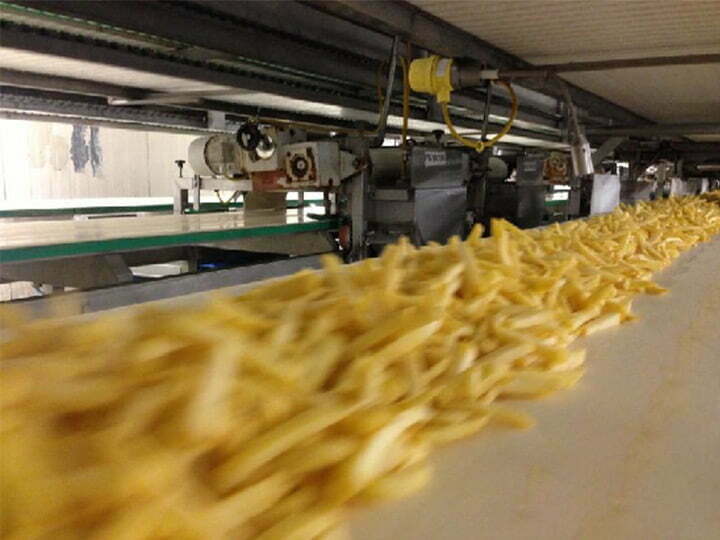
Die vollautomatische Pommes-Frites-Produktionslinie ist eine Großkapazitäts-, kontinuierliche Produktionslinie, die aus einer Reihe von Edelstahl-Pommes-Frites-Maschinen besteht. Die Produktionslinie reicht vom Kartoffelwaschen bis zum Frittieren und Verpacken. Die vollautomatische Produktionslinie ist hochautomatisiert. Ihre Produktionsleistung kann bis zu 3000 kg/h betragen. Alle Maschinen bestehen aus Edelstahl und sind korrosionsbeständig. Kürzlich haben wir in der Türkei eine 500 kg/h-Pommes-Frites-Produktionslinie installiert.
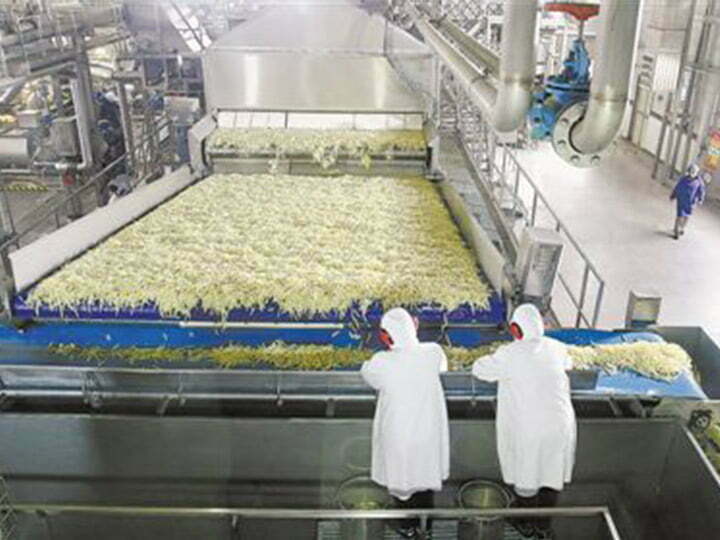
Schritte der Pommes-Frites-Verarbeitung
Die Produktionsschritte von Pommes Frites umfassen: Waschen, Schälen, Schneiden, Blanchieren, Entwässern, Frittieren, Entfetten, Einfrieren, Verpacken.
Bei der Produktion von vollautomatischen Pommes Frites sind alle oben genannten Maschinen notwendig. Außerdem werden einige Förderbänder benötigt, um die benachbarten Maschinen zu verbinden.
1.Kartoffelwaschen und Schälen. In the production process of fully automatic French fries and potato chips, need a commercial potato washing and peeling machine to clean the potatoes first. It will peel potatoes by reverse friction movement of the hair roller and the potatoes. And during the same time, it conveys peeled potatoes to the outlet. Its peeling efficiency can reach more than 99%.
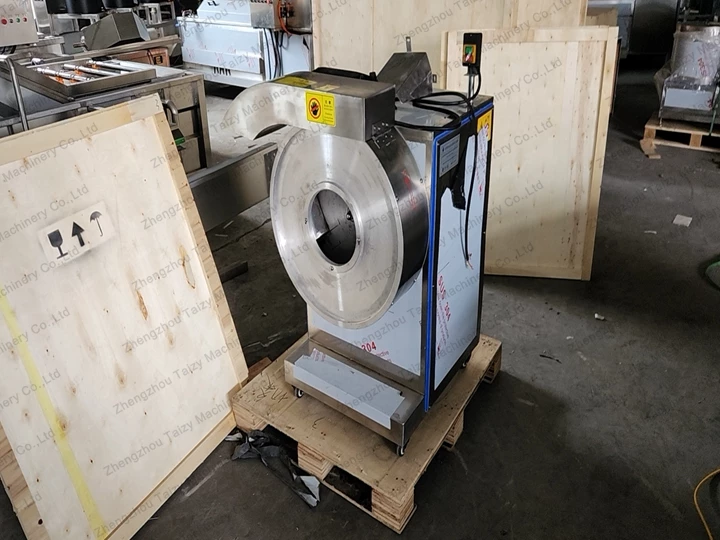
2.Potato strips cutting. The fries cutting machine is professionally used to cut potato strips. Its cutting range is 3-12mm. The cut potato strips are of regular shape and uniform thickness.
3.Potato strips blanching. The role of blanching is to remove the starch in the potatoes so as to maintain good color and taste during frying. The continuous potato blanching machine achieves the purpose of blanching while conveying the potato strips.
4.Potato strips dehydrating. After blanching, the potato strips need to be dehydrated for better frying. It also prevents oil splashes caused by excess water during frying. When the blanched potatoes reach on the dehydrator machine. The motor of the vibration dehydrator drives the dehydration plate to shock up and down to achieve the purpose of dehydration.
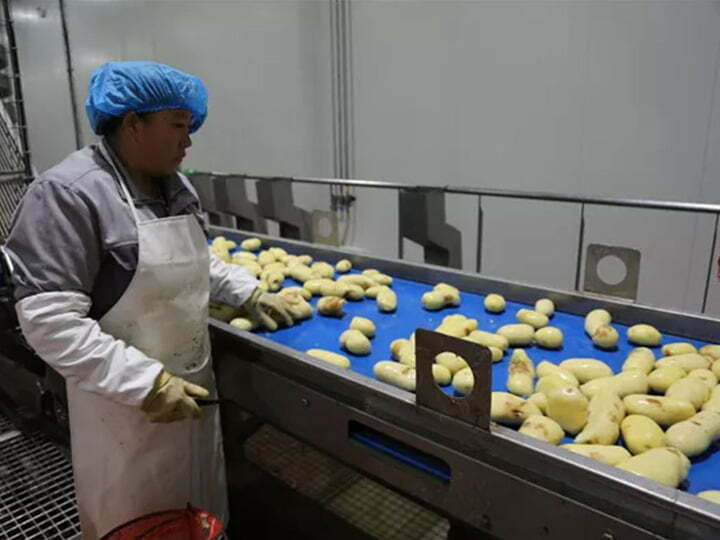
5.Potato strips frying. The potato strips frying machine is a continuous mesh belt fryer. And we also can customize machine length to satisfied different customer’s production requirements. It can automatically control the temperature and frying time, and the machine is equipped with a scraper to automatically transport materials forward. The fried potato strips are golden in color and highly matured.
6.French fries degreasing. In order to ensure that the taste of fried fries, it is necessary to use a degreasing machine to remove excess oil stains on the surface of the fries. The vibration deoiler and the vibration dehydrator are the one machine. It adopts the same machine with the vibration dehydration.
7.French fries freezing. It is necessary for large scale french fries production to need a freezer machine to freeze french fries after frying. Its main purpose is to keep fried fries fresh and avoid stick together.
8.French fries packaging. We need to know the customer’s required packaging size and weight to recommend them a suitable model packaging machines. The french fries packaging machine can achieve feeding, weighing, and sealing automatically. The fries packaging machine has the characteristics of accurate packaging weight and sealing rules.
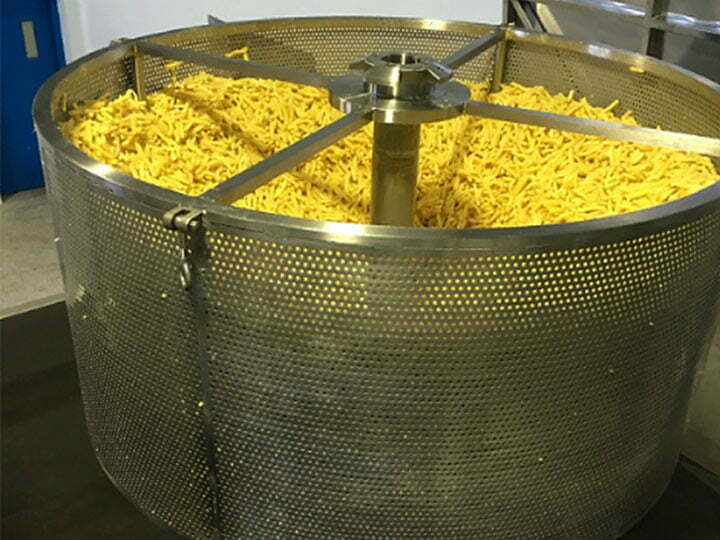
Bestelldetails der türkischen Pommes-Frites-Produktionslinie
Der türkische Kunde plant, täglich 4 Tonnen Pommes Frites herzustellen und 8 Stunden am Tag zu arbeiten. Er möchte den Großteil des Geldes in Maschinen und Werkstätten investieren, um den Personaleinsatz zu reduzieren. Zudem strebt er eine groß angelegte Produktion an und möchte die hergestellten Pommes Frites an lokale Händler, Restaurants und andere Einrichtungen verkaufen. Daher empfehlen wir ihm die vollautomatische 500 kg/h-Pommes-Frites-Verarbeitungsanlage.
Er hat uns in sein Fabrikgelände und die Form gebracht und hofft, dass wir ihm die Maschinenzeichnungen und die Platzierung der Maschinen zeigen können. Dann verhandeln unsere Techniker mit den Kunden über den Maschinenplatzierungsplan und senden ihm eine detaillierte Zeichnung. Nach mehreren Verhandlungsrunden hat der Kunde alle Maschinendetails festgelegt und einige Ersatzteile für die zukünftige Produktion hinzugefügt. Nach der Kommunikation aller Details hat der Kunde einen Vertrag mit uns unterzeichnet.